-

-
-
En
-

The solar industry thrives on efficiency—every percentage point in energy gain directly impacts profitability. Among mounting systems, single-axis solar trackers have emerged as the gold standard for commercial and utility projects. But what makes them outperform fixed-tilt arrays so decisively?
The answer lies in single-axis solar tracker efficiency—by dynamically following the sun’s path, these systems increase energy output by 15–25% compared to fixed arrays, translating to higher ROI and shorter payback periods. Their mechanical simplicity also ensures reliability, making them ideal for large-scale deployments.
For developers weighing their options, understanding why solar panel single axis tracking dominates is crucial. Below, we dissect the key advantages of single-axis solar trackers — from energy gains to long-term financial benefits — that solidify their superiority.
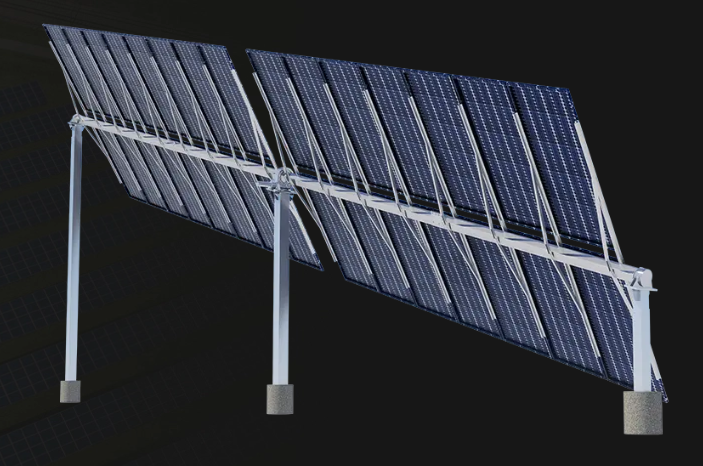
Designed to chase sunlight, single-axis trackers outperform fixed arrays even under suboptimal conditions. Adjusting panels incrementally, they capture more direct irradiation during peak hours, whereas static systems suffer cosine loss.
There being no idle positioning, trackers maximize output from dawn to dusk. Were fixed arrays equally efficient, their adoption would be widespread, yet trackers’ proven results make them the default choice for utility-scale projects.
Higher efficiency isn’t just about raw numbers—reducing land use per megawatt, they cut infrastructure costs while meeting tighter project footprints. Solar fields opting for trackers often require fewer panels to hit target capacities, further lowering CAPEX and upkeep.
| Factor | Single-Axis Tracker | Fixed-Tilt Array |
|---|---|---|
| Upfront Cost | Moderate ($) | Low ($) |
| ROI Timeline | 3–5 years | 5–7+ years |
| Lifetime Value | Higher (25% more energy) | Standard |
While fixed arrays demand lower initial investment, their longer payback periods erode financial advantages. Optimized for utility-scale economics, single-axis trackers justify their premium through energy gains alone.
Granted, terrains with high wind loads may need reinforced structures, but most commercial sites benefit from trackers’ standardized designs. Were financing not a hurdle, developers would universally prioritize trackers for their superior LCOE (Levelized Cost of Energy).
Engineered for durability, single-axis trackers resist environmental stressors better than perceived. Incorporating robust motors and fewer moving parts, they demand minimal maintenance, unlike dual-axis systems prone to mechanical failures.
There exist misconceptions about trackers’ vulnerability to storms, yet modern designs integrate stow positions to withstand extreme weather. Fixed arrays, though simple, waste potential energy when clouds or seasonal angles shift.
Not only do trackers adapt to changing skies, but they also maintain consistent output—a critical edge for grid stability and PPA (Power Purchase Agreement) compliance.
From solar farms to agrivoltaics, single-axis trackers enable modular expansion without redesigns. Requiring no custom tilts per row, they simplify installations across uneven terrain, whereas fixed arrays struggle with slope mismatches.
Were land acquisition easier, fixed systems might compete, but maximizing wattage per acre, trackers cut land lease costs significantly. Projects spanning hundreds of megawatts often rely entirely on tracking, as efficiency gains compound at scale.
Though pricier upfront, trackers guarantee faster returns via energy upsides. Tax incentives and accelerated depreciation further tip scales toward tracking, as governments prioritize high-yield renewables.
Assuming energy prices rise, trackers lock in higher revenue over decades. There being few alternatives that boost output without adding panels, their value proposition remains unmatched.
Pairing trackers with bifacial panels, next-gen systems push efficiency boundaries further. Were AI-driven tracking adopted universally, gains could exceed 30%, but even today’s basic single-axis models deliver transformational results.
Sustainability mandates tightening globally, trackers position projects ahead of regulations. Not just an upgrade—but a necessity for competitive solar development.
When planning a large-scale solar project, understanding the advantages of single-axis solar trackers is crucial for maximizing energy efficiency and return on investment. Advantages of single axis solar tracker system go far beyond simple motion — they represent a transformative step in solar technology innovation. For developers seeking higher yields, superior efficiency, and long-term durability, understanding and leveraging the advantages of single-axis solar trackers is the key to unlocking the potential of solar power.

 CN
CN JP
JP