-

-
-
En
-

Good question—because if you don't know what it is, the rest of the questions don't really matter.
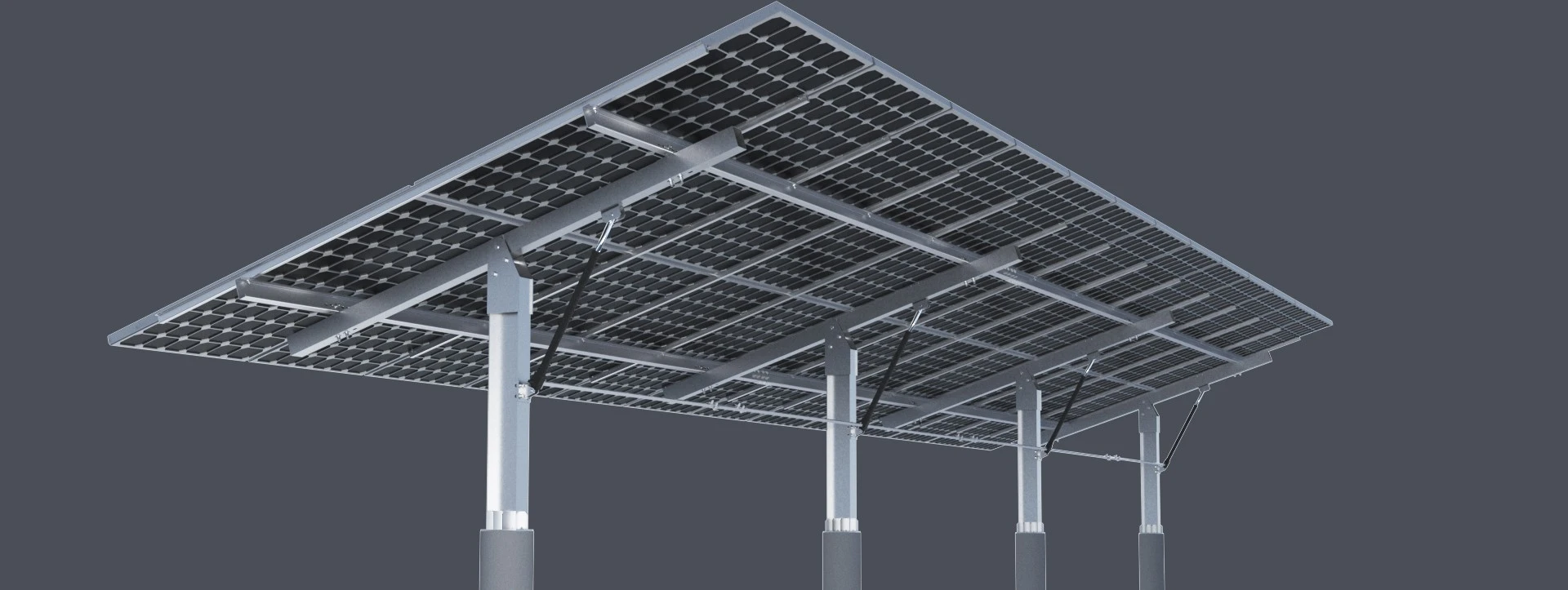
Integrated Solar Roofing, simply put, is turning solar panels into your actual roof.
Here's how the traditional game works: First, you pay for a roof—tiles or metal sheets. Then you pay someone else to install racks and mount solar panels on top. Two separate systems. Two labor costs. Two sets of materials. And in between? A whole lot of potential leaks—because drilling holes through your roof to mount those racks? Yeah, water eventually finds its way in.
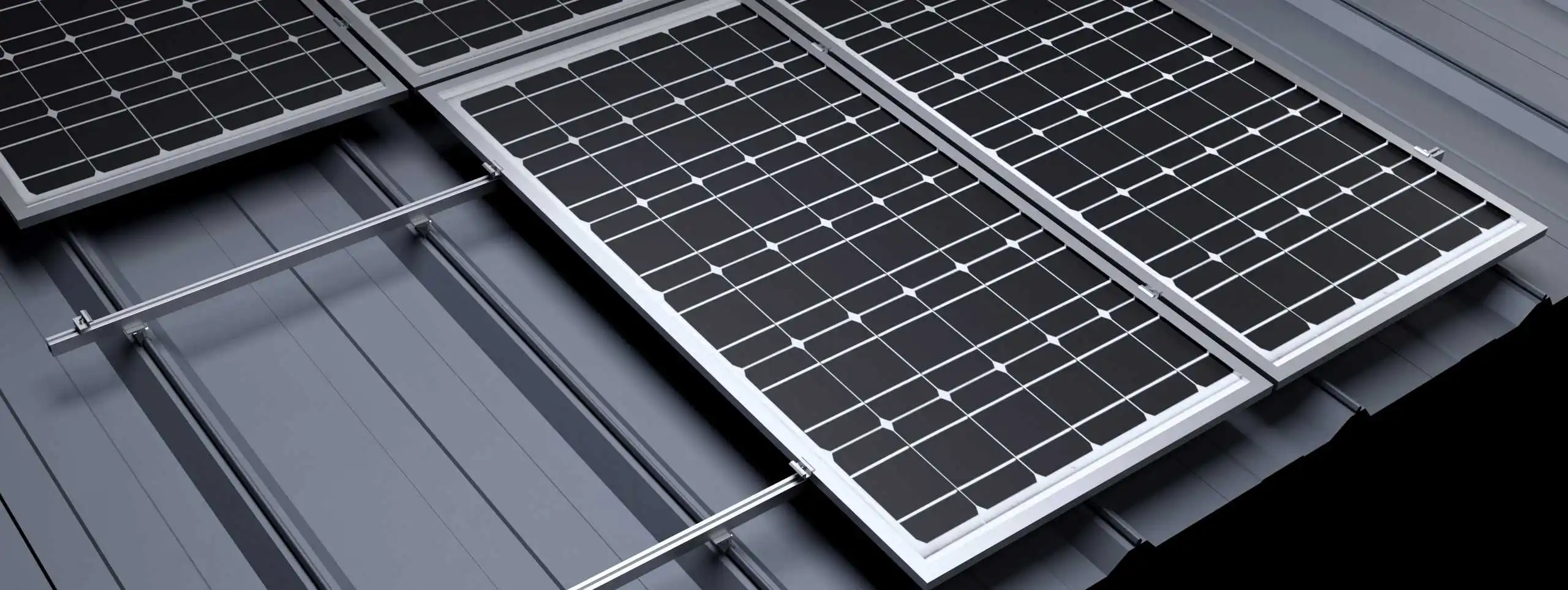
Our Integrated Solar Roofing is different. It replaces the conventional roof entirely. Your solar panels are your roof. Rain hits the panels, and directly underneath is your building interior—no metal deck, no tiles, just one integrated system.
In plain English: Other people put solar on their roof. You own a roof that happens to generate electricity.

This is the question we hear most often. Translated: "I'm spending real money on this thing—don't tell me it'll die in ten years."
Fair enough. Nobody lights cigars with their hard-earned cash.
Here's the straight answer: Our integrated photovoltaic systems are designed for 25+ years. That's on par with conventional roofing, and longer than most "roof + solar" combinations.
Why so long?
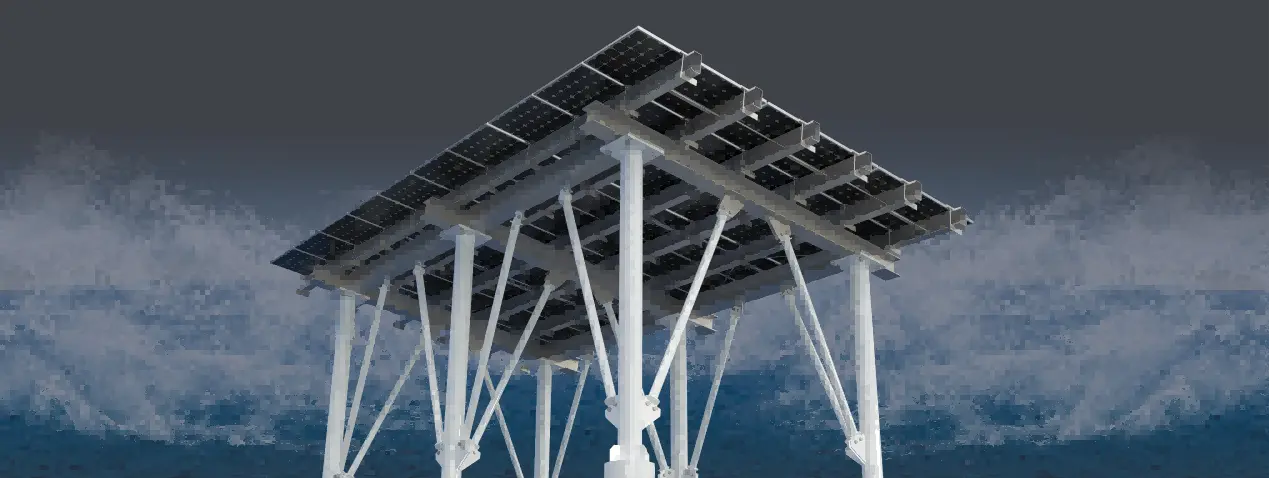
First, materials matter. We use double-glass N-type heterojunction monocrystalline modules. Translation? Glass on both sides, solar cells in the middle. Traditional panels have a plastic backsheet—expose that to sea air for a few years and it gets brittle. Our glass backsheet? Salt spray? Corrosion? Doesn't care.
Second, no secondary damage. Traditional method: install tiles, then drill holes through them to mount racks. Every hole is a potential leak point and a corrosion starter. Our system mounts directly to the building structure—zero penetrations through your roof surface. Water wants to leak? Good luck finding a way in.
Third, we test harder than we need to. Salt spray? 1,500 hours minimum. Damp heat? 2,000 cycles. Hail? 25mm ice balls at 23 meters per second. Honestly? Watching those test reports, I almost feel bad for the samples.
So back to the question: How long does it last? Long enough to watch you replace your next car. And the one after that.
Let's tackle time first, because time is money.
Take a 1,000-square-meter commercial roof:
Traditional approach: Install metal roof first (5-7 days), then mount solar racks and panels (7-10 days). Total: 12-17 days.
Our BIPV system: 7-10 days, fully installed and connected.
Where do those 5-7 days go? That's the metal roof installation we just eliminated. Because we don't need that extra layer.
How do we save time? Modular pre-assembly.
We assemble the panels and mounting frames at our factory. On-site, it's just lifting, securing, and wiring. No truckloads of steel arriving for on-site cutting and welding. You're building a power plant, not running a metal fabrication boot camp.
Now, about special crews: You don't need them.
If you already have:
Steel structure installers (can read drawings, turn a wrench)
Electricians (know wiring and safety)
General laborers (move stuff, keep things tidy)
You're good.
When we designed this building integrated PV system, we had one rule: Nothing special. Special means hard to find workers. Hard to find workers means unpredictable schedules. Unpredictable schedules means blown budgets.
We provide detailed drawings and on-site guidance. First time installing? No problem—we'll send someone.
This is the question that cuts to the chase. Because at the end of the day, someone's writing a check.
Let's be honest: Upfront cost? Yes, BIPV costs more.
Why? Because traditional is "build a cheap roof, then pile solar on top." BIPV is one integrated system—the solar modules are the roof. So those modules need to be tougher, more waterproof, and better looking. Better materials cost more.
But how much more? Let's do the math:
For a 1,000-square-meter roof:
Traditional: Metal roof solar panel mounts (~¥300/m²) + Solar mounting (~¥200/m²) + Solar modules (~¥800/m²) = ¥1,300/m²
BIPV: Integrated system (modules, structure, waterproofing included) = ¥1,500/m²
That's ¥200 more per square meter upfront. Total difference: ¥200,000.
Sounds like real money, right? Now let's run the rest of the numbers:
What you save later:
Maintenance: Traditional roof + solar? You're replacing the waterproofing layer at least once in 20 years (¥50,000-80,000). Replacing corroded rack bolts? Another ¥30,000-50,000. Interior repairs from leaks? That's a lottery you don't want to play. BIPV? No penetrations, no gaps. We don't have a separate waterproofing layer—we are the waterproofing layer.
More power generation: BIPV runs cooler than tightly mounted traditional panels—better ventilation. That means 3-5% more electricity over 20 years. At current rates? ¥150,000-200,000.
No double labor: Your traditional roof needs replacing after 15 years? Gotta remove all those panels, replace the roof, then reinstall everything. That labor cost alone could buy you half a new BIPV system.
So the real math looks like this:
Pay ¥200,000 more upfront
Save ¥300,000 over 20 years
Net gain: ¥100,000, plus a better-looking roof
We call that pay more now, pay less forever.
Let's translate this one: "If something breaks, will it be a nightmare to fix? And will it cost me an arm and a leg?"
Short answer: Lower than traditional. Significantly lower.
Reason one: Fewer things to break.
Traditional has two systems: the roof system and the solar system. Twice the components, twice the potential failure points.
Roof might leak. Racks might corrode. Panels might age. Connections might loosen. Every component is a maintenance ticket waiting to happen.
BIPV is one system. We engineered waterproofing, structure, and power generation together as an optimized whole. One less system means half the potential problems.
Reason two: Even if something breaks, it's easy to fix.
The question we hear most: "If one panel fails, do you have to tear off the whole roof?"
Answer: No. You replace just that panel.
Our building integrated PV system is modular. Each panel has its own quick-connect mechanism—both electrical and mechanical. Failed panel? Undo a few clamps from below, unplug, swap in a new one, plug back in, reclamp.
Done.
One worker. One tool. Thirty minutes.
Traditional? Remove the failed panel, inspect the roof underneath (hope the holes didn't leak), install new panel, reseal everything. If you're unlucky, you're pulling up surrounding panels just to get working space.
Reason three: We've got your back with warranties.
Panel performance: 25-year linear power guarantee (≤2% first-year degradation, ≤0.55% annually after)
Waterproofing: 15-year warranty
Structural components: 20-year corrosion protection
Something goes wrong? Call us. We fix it.
So back to the question: Will maintenance cost more? No. And we can show you the math so you sleep soundly.
This question usually comes from two types of people:
Architects—they genuinely care about how things look.
Building owners—they care because their architect told them to care.
Answer: Yes, and we're happy to.
First, color. Traditional solar? Blue or black. Take it or leave it. Our integrated roofing systems come with five standard colors (black, dark grey, silver grey, beige, brick red). And if you're willing to wait a bit and adjust your budget? We can match Pantone colors. As long as the spectral response doesn't take too much of a hit, we won't stand between you and your vision.
Second, texture. Want matte? Brushed? Mirror finish? Can do. Want it to look like traditional tiles? We have a corrugated texture option. Want it to look like metal panels? Brushed finish. Want it to look like not solar panels at all? That costs extra—we print custom patterns to disguise the cells.
Third, translucency. Skylight area needs light transmission? No problem. Semi-transparent modules available, 5% to 40% translucency. Want completely opaque? Also fine—solid backsheet.
What we tell architects: Tell us what you want. We'll figure out how to make it happen. And if we genuinely can't, we'll tell you why—not just say "no" and walk away.
Fair warning: More customization means higher cost and longer lead time. Physics doesn't care about your design vision. But at least with us, you have options. Traditional? Your only option is "take what they make."
This is the real question. Because none of the above matters if the authorities say no.
Short answer: Yes, and we've helped clients get approvals many times.
But the more accurate answer: Whether it passes depends on how you submit it—and who you're working with.
A few suggestions:
First, bring us in early.
Worst case: Building design is finalized. Approvals are done. Then the owner says, "Hey, can we put solar on the roof?" Trying to switch from conventional to BIPV at that stage? You're basically reapplying for planning permission. Good luck with that.
Our advice: If you're considering BIPV, bring us in during design. We'll help with the方案, prepare submission materials, talk to your design institute—way less painful than last-minute changes.
Second, we come with papers.
Fire rating: Class A (same as concrete roof)
Structural load: Passed national code requirements for wind, snow, seismic
Electrical safety: TÜV certified, IEC61215 and IEC61730
Waterproofing: Passed rain penetration tests
Certificates, test reports, you name it—we have originals ready for your design institute and approval authorities.
Third, we have references.
"You've done this before? Got any projects that made it through approval?"
Yes. Shandong project? Submitted 2023, approved 2024, now grid-connected. Zhejiang project? Historic building renovation—planning authority was worried about appearance. We showed renderings and actual photos. Approved. Jiangsu project? Another one.
Final honest words:
No solar racking system manufacturers can guarantee 100% approval—that decision belongs to the authorities. But what we can guarantee: If you design to code and submit properly, our products and documentation won't be what holds you up.
These are the questions clients have asked us over the past decade-plus. Questions we've also asked ourselves.
Some we answer easily—the answers are straightforward. Some take hours of number-crunching and digging through test reports—because the questions themselves are complicated.
But simple or complicated, we stick to one principle: Tell the truth. Show the math. Give choices.
We won't tell you our products are unbeatable—you'd know we're bluffing.
We won't say "just use ours and stop asking questions"—you'd know we're brushing you off.
We tell you where we're strong, where we're average, and where traditional solutions might actually suit you better.
Got more questions? Drop them below or DM us. We'll keep answering.

 CN
CN JP
JP