-

-
-
En
-

Flat roof photovoltaic installations have become a standard solution for commercial and industrial buildings due to their efficient use of unused roof space and scalable system design. However, the success of any solar panel mounting on flat roof project depends less on the modules themselves and more on the structural mounting strategy behind them.
In modern EPC practice, two dominant engineering approaches are used: ballasted (non-penetrating) systems and penetrated (mechanically anchored) systems. Each represents a different structural philosophy for resisting wind uplift and transferring loads into the building structure.
Rather than focusing on waterproofing concerns—which are assumed to be properly resolved through certified installation practices—this article focuses on engineering selection criteria based on structural load, wind behavior, cost efficiency, and system compatibility.
Ballasted systems rely on gravitational mass to counteract wind uplift forces acting on the photovoltaic array. Instead of penetrating the roof membrane, the system uses weighted blocks or trays to stabilize the structure.
The fundamental engineering condition is:
Ballast Load ≥ Wind Uplift Force
In practical design, total system load typically ranges from:
· 30–60 kg/m² depending on tilt angle and wind zone classification
Ballasted systems must be designed with zonal wind pressure distribution in mind:
· Corner zones → highest uplift forces
· Edge zones → moderate forces
· Center zones → lowest forces
CNTsun's SkyRoof flat roof mounting system for solar panels is engineered to optimize ballast distribution using aerodynamic analysis and modular structural design, reducing unnecessary weight while maintaining stability.
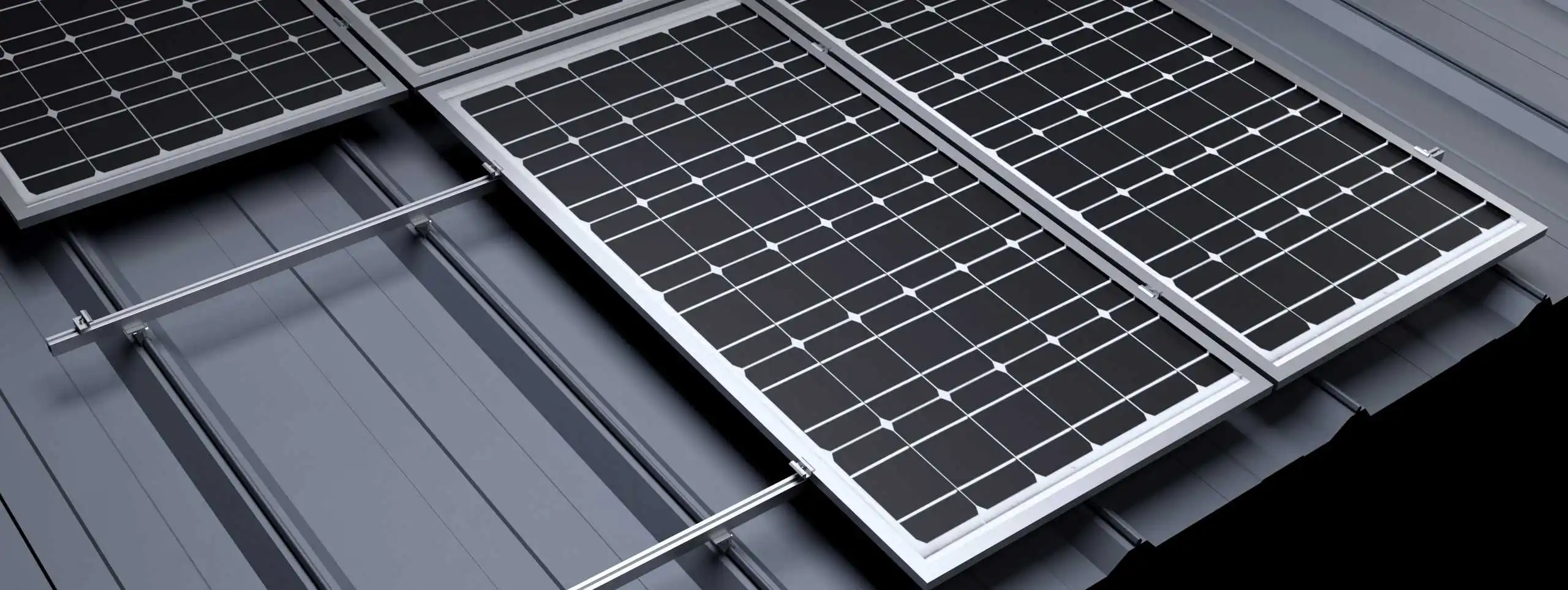
Penetrated systems, also referred to as mechanically attached systems, use anchors to transfer wind loads directly into the roof’s structural layer, such as concrete slabs or steel beams.
Unlike ballast systems, resistance is not based on weight but on mechanical fastening strength.
Key characteristics:
· System load: 12–20 kg/m²
· Load path: direct structural anchoring
· Resistance mechanism: tensile + shear strength of fasteners
Each anchor point must be verified through pull-out testing and structural analysis to ensure compliance with design wind loads.
This approach is often used in:
· high wind regions
· structurally constrained roofs
· permanent long-life installations
Parameter | Ballasted System | Penetrated System |
Load transfer method | Gravity (mass-based) | Structural anchoring |
Typical system weight | 30–60 kg/m² | 12–20 kg/m² |
Wind resistance | Moderate | High |
Roof penetration | None | Required |
Structural dependency | Roof load capacity | Anchor strength |
From a structural engineering perspective, the choice is fundamentally a trade-off between distributed mass resistance and localized structural anchoring.
Wind load is the dominant factor in flat roof photovoltaic design.
Ballasted systems must be carefully sized to resist uplift forces that vary significantly by region:
· Low wind zones → ~10–20 kg/m² ballast requirement
· Moderate zones → 30–50 kg/m²
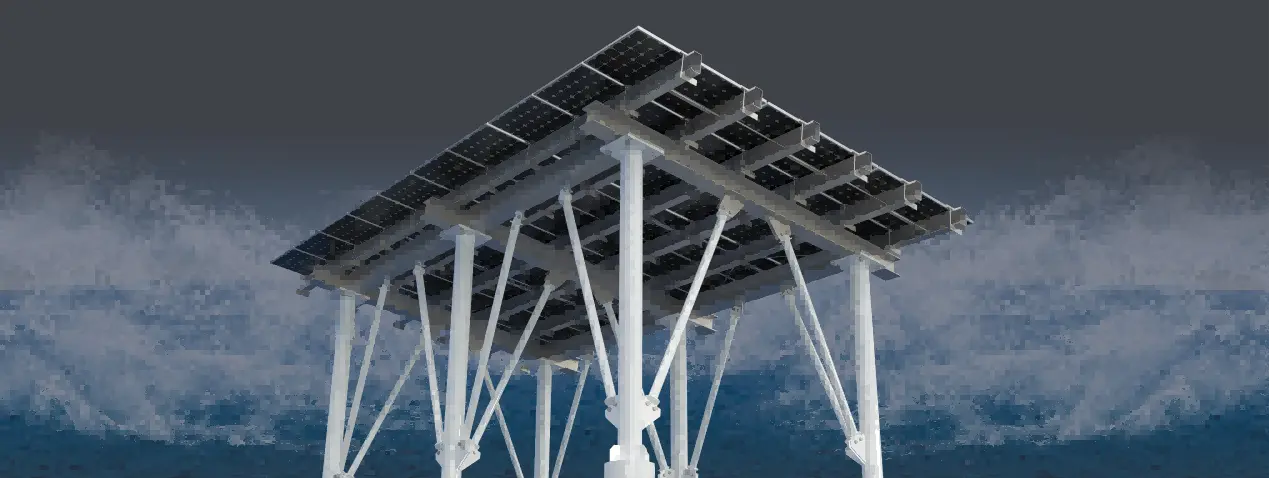
· High wind / coastal zones → up to 48–100 kg/m² depending on tilt angle
According to ASCE 7-22 wind load design methodology (widely adopted in engineering practice), roof pressure distribution varies significantly:
· Corner zones may experience 2–3× higher wind pressure than central zones
· Ballasted systems
o Use distributed weight resistance
o Can be optimized with aerodynamic wind deflectors (reducing uplift by ~15–20%)
· Penetrated systems
o Use direct structural anchoring
o Better suited for extreme wind environments
In advanced projects, CFD simulation or wind tunnel testing is often used to validate system design assumptions.
Cost evaluation must include both installation cost and long-term lifecycle performance.
· Ballasted systems: $0.01–0.10/W
· Penetrated systems: slightly lower hardware cost, but higher installation complexity
· Ballasted systems:
o No drilling required
o No sealing operations
o Faster installation
· Penetrated systems:
o Requires drilling and anchoring
o Each penetration must be sealed and inspected
o Longer installation time
Ballasted systems are typically $0.10–0.15/W lower in total installed cost, depending on project scale and labor conditions.
From a lifecycle perspective:
· Ballasted systems → lower maintenance requirement
· Penetrated systems → periodic anchor inspection required
Project Type | Recommended System | Engineering Reason |
Commercial warehouse (new build, high structural reserve) | Ballasted | Fast installation, cost-efficient |
Aging industrial roof | Penetrated | Load constraint management |
Coastal / high wind buildings | Ballasted + aerodynamic optimization or hybrid | Wind load reduction required |
Rental or temporary buildings | Ballasted | Fully removable system |
Modern photovoltaic design is increasingly integrating different structural approaches to optimize performance across terrains.
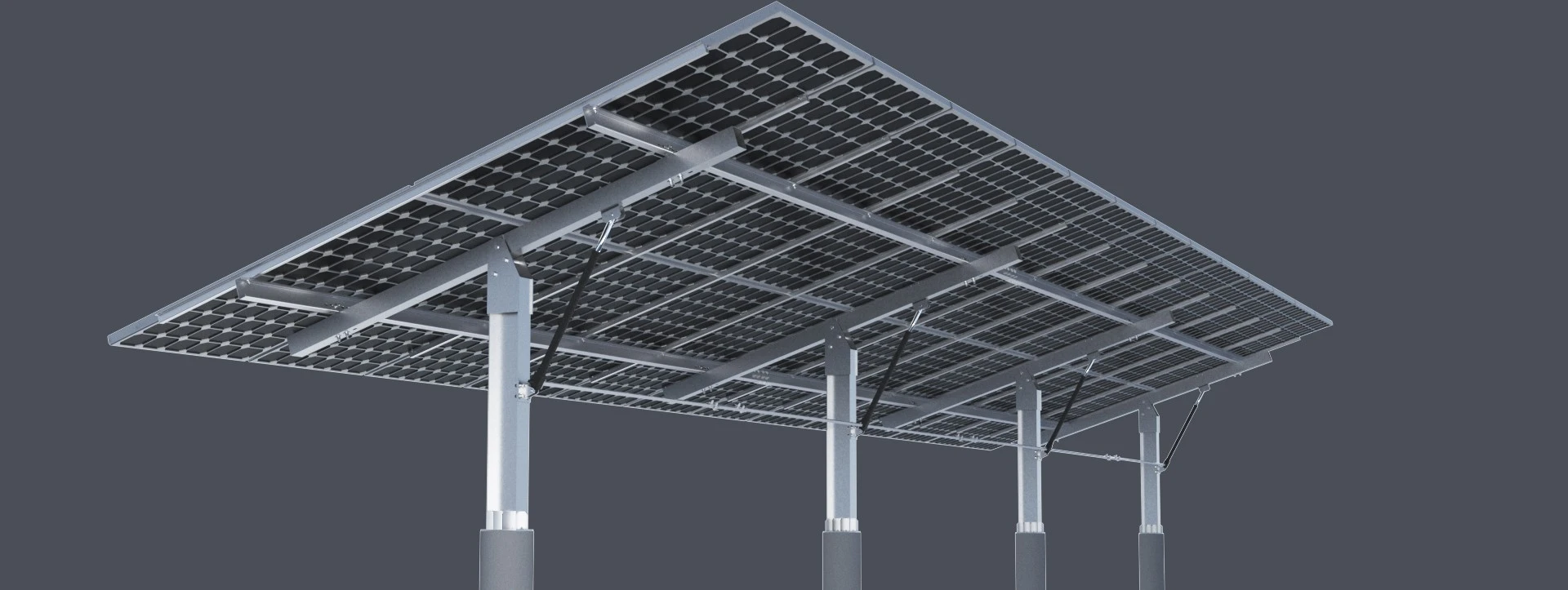
For example, adjustable solar panel ground mount systems are often used as a comparative reference in EPC design when evaluating tilt flexibility versus fixed flat roof installations.
Similarly, large-scale utility projects may adopt fixed tilt ground mount solar configurations when roof space is unavailable, while advanced systems may incorporate horizontal solar tracker technology to improve energy yield through dynamic sun tracking.
These comparisons help EPC contractors evaluate flat roof systems within the broader context of solar project engineering.
CNTsun’s SkyRoof mounting system is designed to support both ballasted and mechanically attached configurations, allowing flexible adaptation based on structural and environmental conditions.
· Ballasted configuration → optimized load distribution and fast installation
· Penetrated configuration → high wind resistance and structural anchoring
This dual-compatibility design allows EPC contractors to standardize procurement while maintaining engineering flexibility across diverse project conditions.
Ballasted and penetrated flat roof solar mounting systems represent two fundamentally different engineering approaches to wind resistance and structural load management. Ballasted systems prioritize speed, cost efficiency, and roof integrity, while penetrated systems offer higher mechanical stability for extreme environments. The optimal choice depends on roof load capacity, wind conditions, and project lifecycle goals. CNTsun’s SkyRoof system enables adaptable engineering solutions for diverse flat roof photovoltaic applications in 2026.

 CN
CN JP
JP